
In 2026, Indian Folk Art Corridor invites you to explore one Indian art form every 15 days. The idea is simple. Learn it. Understand it. Truly connect with it.
We begin this journey with Manjusha Art, an ancient and vibrant folk painting tradition from Bhagalpur, Bihar, part of the historic Anga region.
What is Manjusha Art?
Manjusha Art, also known as Snake Painting, is a rare storytelling folk art traditionally painted on scrolls and Manjusha boxes. These paintings narrate the legendary tale of Bihula and Bishahari (Goddess Manasa), a story rooted in devotion, love, faith, and resilience.
Key Characteristics of Manjusha Art
Origin
Bhagalpur, Bihar (Anga region)
Theme
The Bihula–Bishahari legend, symbolizing unwavering devotion and spiritual faith
Style
A sequential narrative format similar to a comic strip
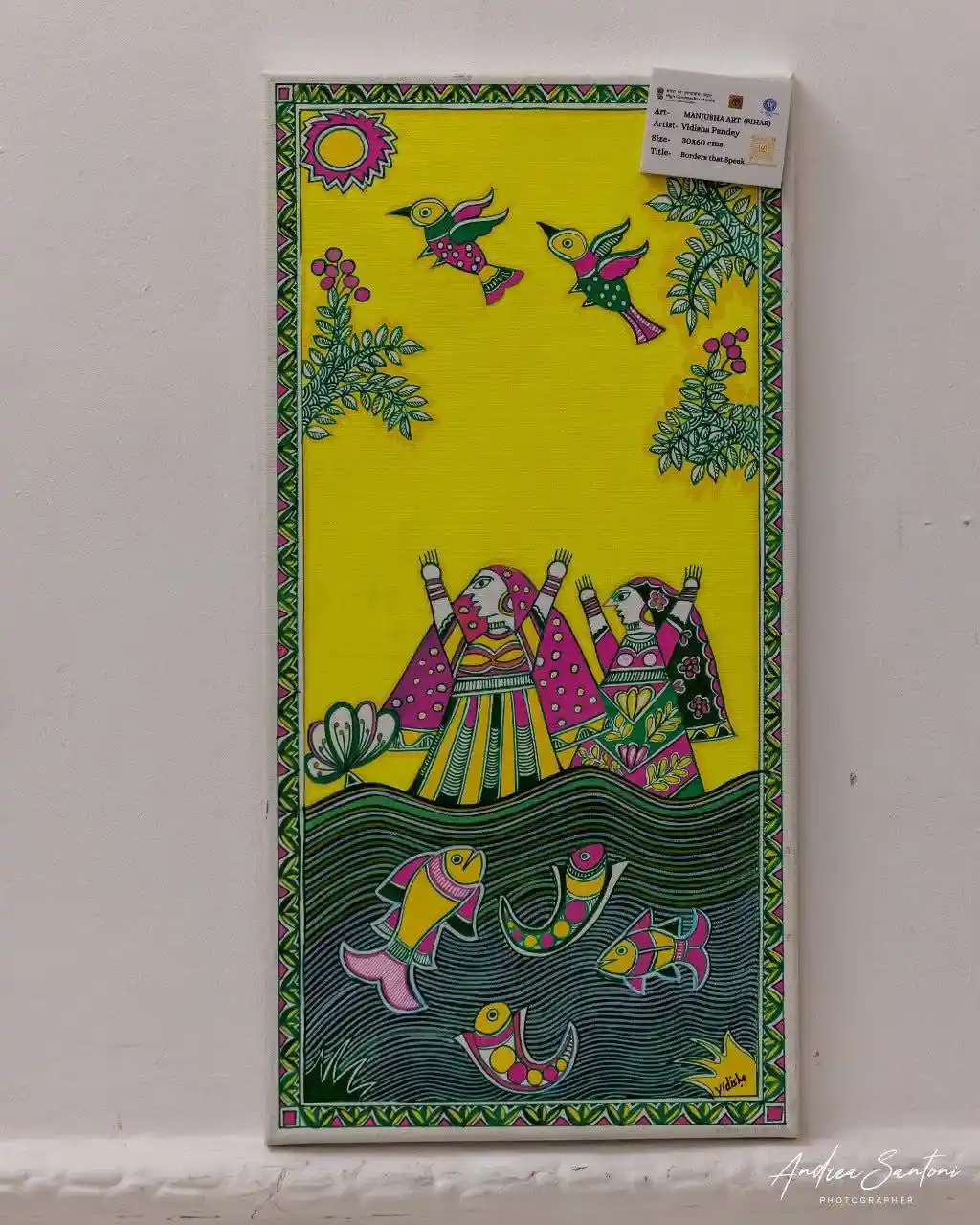
Figures are usually shown in profile and arranged within clear, box-like borders
Colours
Traditionally created using natural dyes
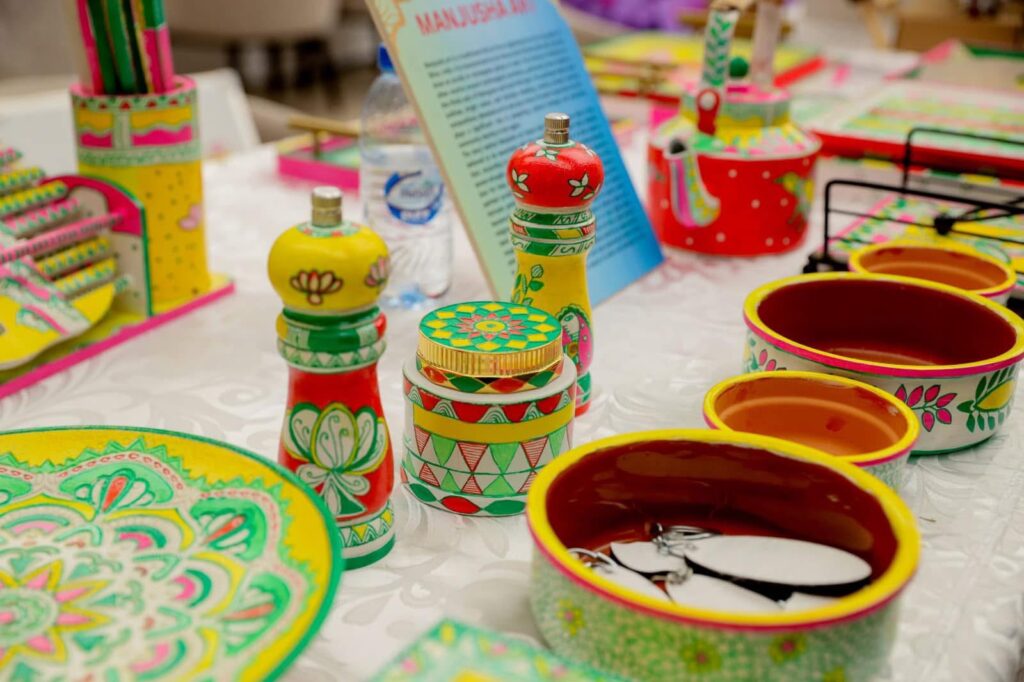
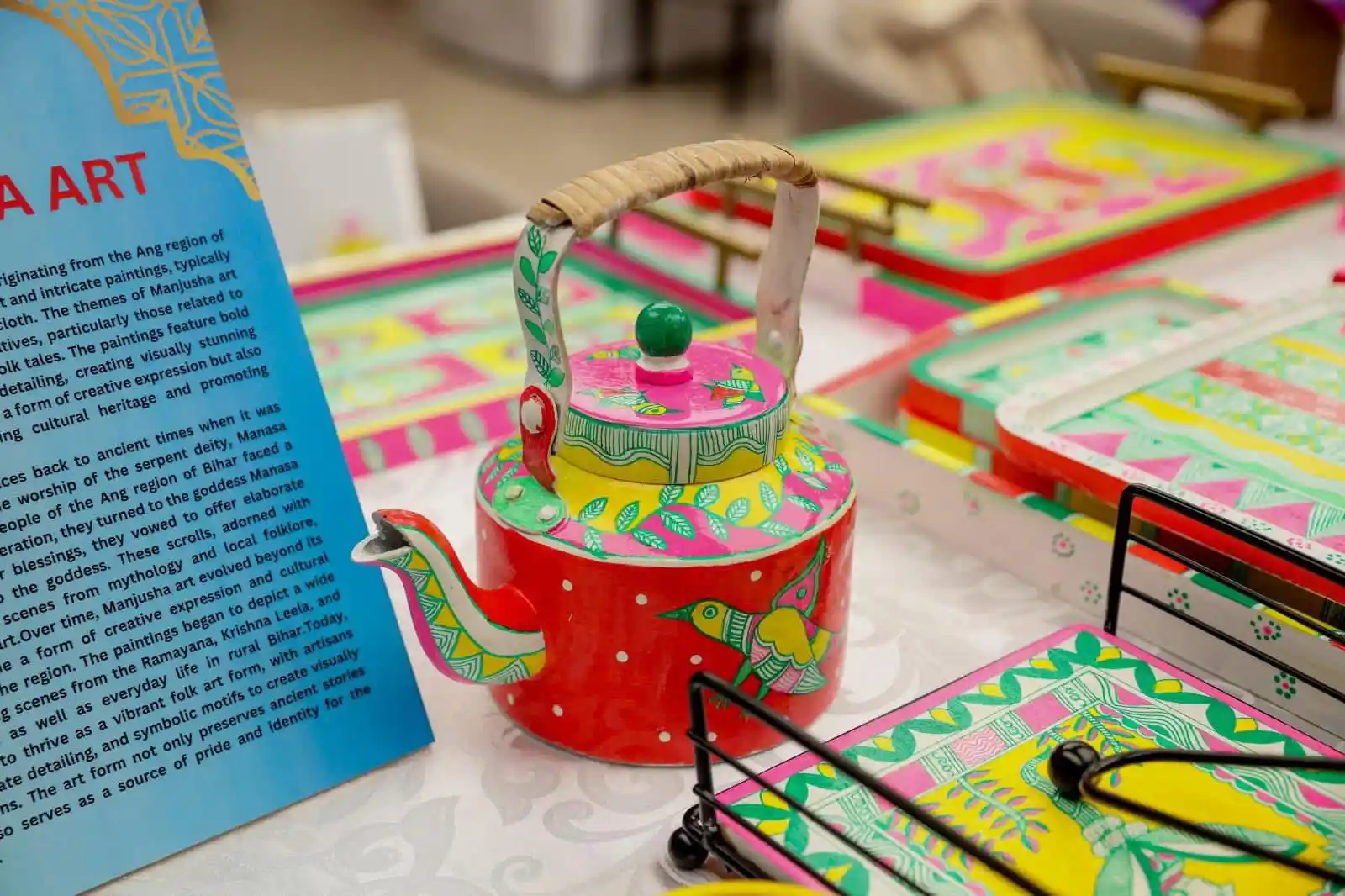
Only three dominant colours are used: pink, yellow, and green
Black is used very rarely and only to express anger
This limited palette is what gives Manjusha art its striking visual power
(As observed by Indian Folk Art Corridor)
Motifs
Snakes (nagas), flowers, fish, and human figures
Name Origin
Derived from Manjusha boxes, ritual chests used in the worship of Goddess Manasa and richly decorated with these paintings
Materials
Handmade paper, cloth, bamboo, or walls
Brushes traditionally made from bamboo
Cultural Significance
• Considered India’s only surviving sequential folk art form
• Deeply connected to regional rituals, festivals, and mythology
• Plays a vital role in preserving the cultural and mythological heritage of the Anga region
Manjusha art is not just a painting style. It is a visual storytelling tradition where the magic of three colours transforms mythology into something timeless and powerful.
What Makes Manjusha Painting Unique?
Vibrant raw three colours, bold lines, and two-dimensional figures are the defining features that set Manjusha art apart.